category
Brand systems, Art direction
year
2025
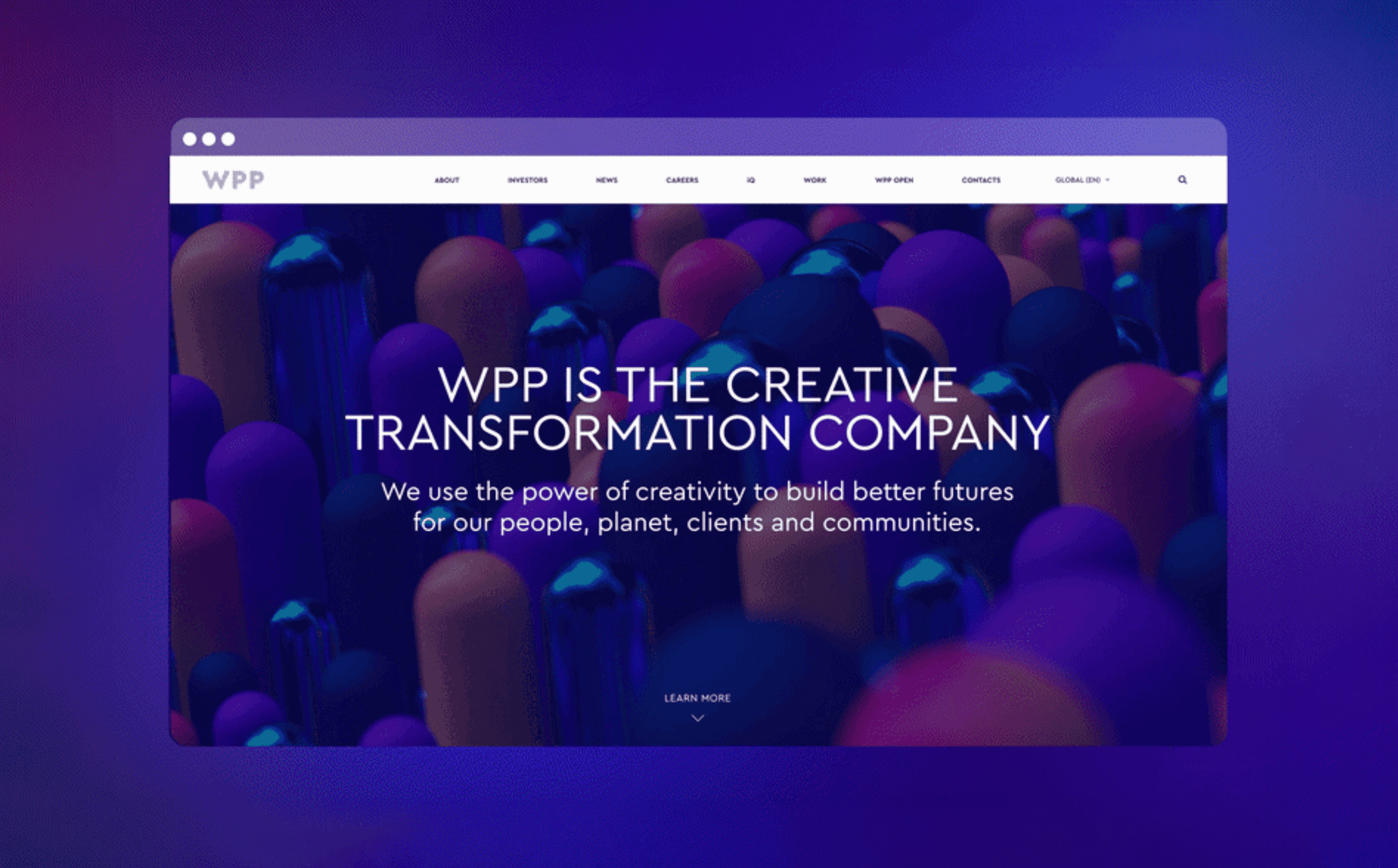
As WPP evolved through a major shift in the company and the brand, the visual system began to show its limits across digital, campaigns and internal communications.

Limits of the system
The identity relied on a highly saturated palette and a dominant spherical device. While effective in isolation, these elements became harder to manage across product, campaigns and internal communications.
The result was a system that appeared consistent, but lacked distinction and adaptability across contexts.
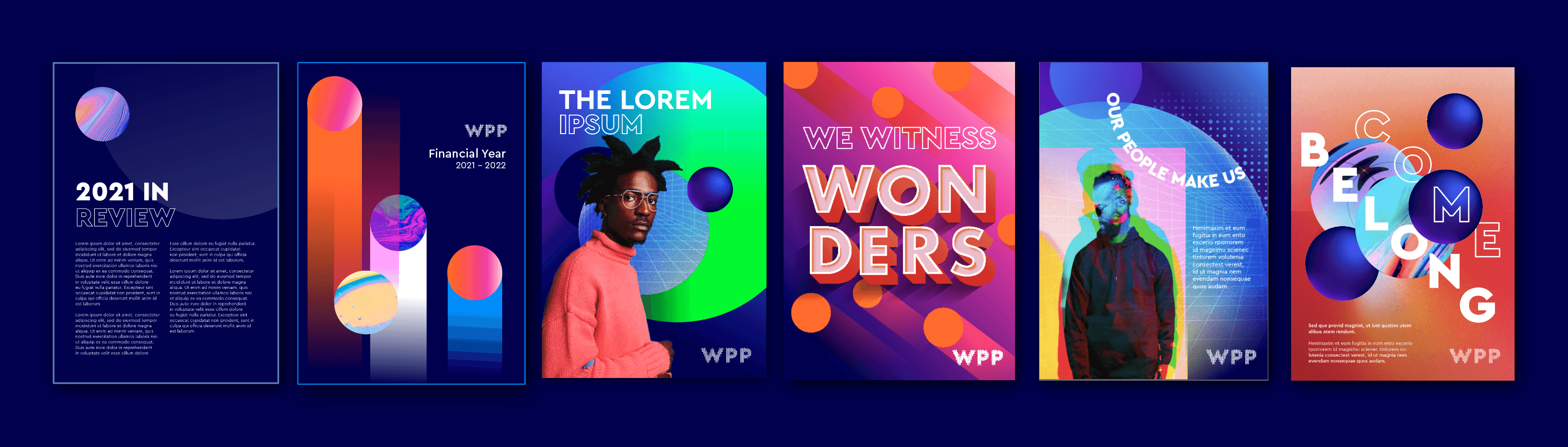
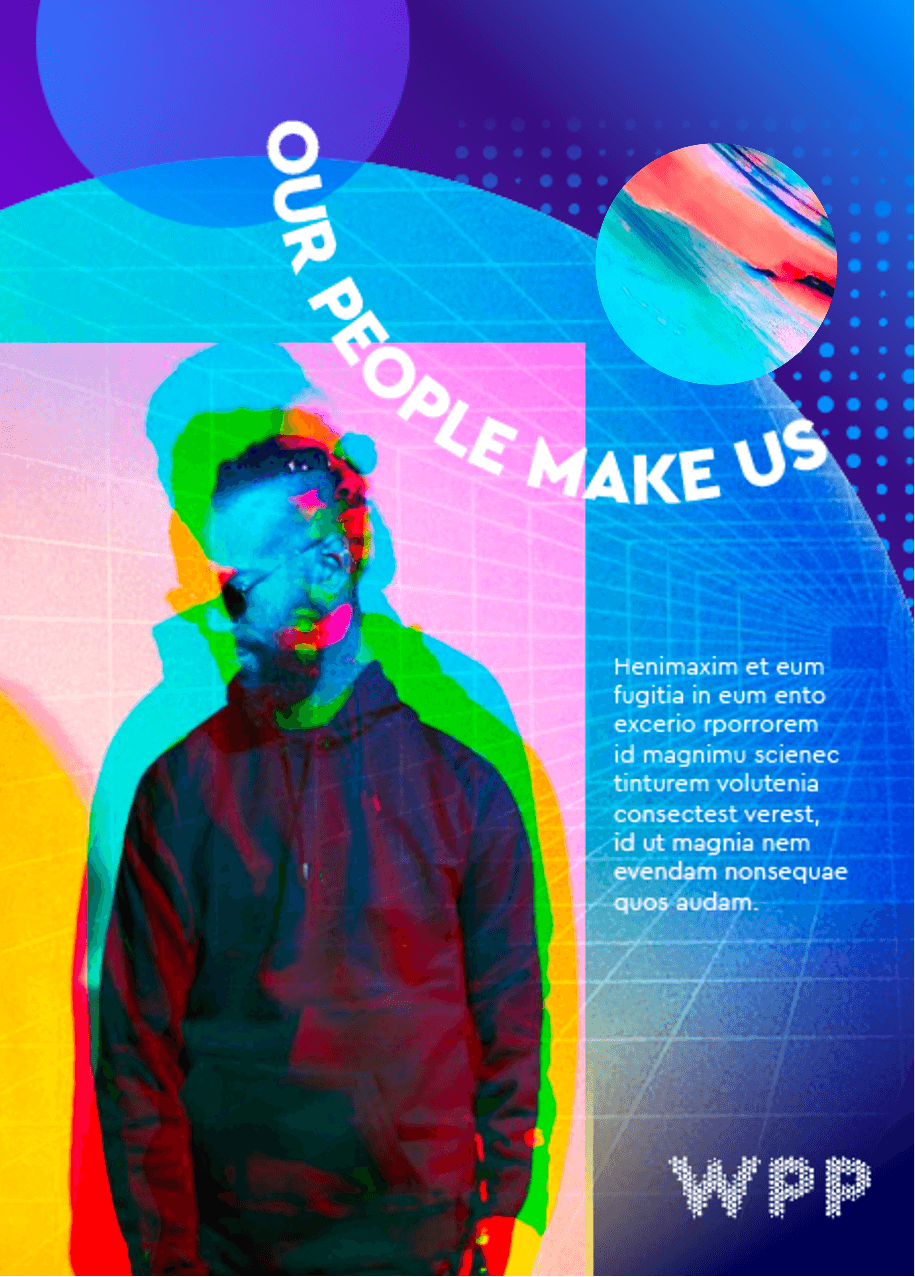
Previous identity
(2021)

Transitional system
(2025)

Current identity
(2026)
The visual transition between the previous and the current identity
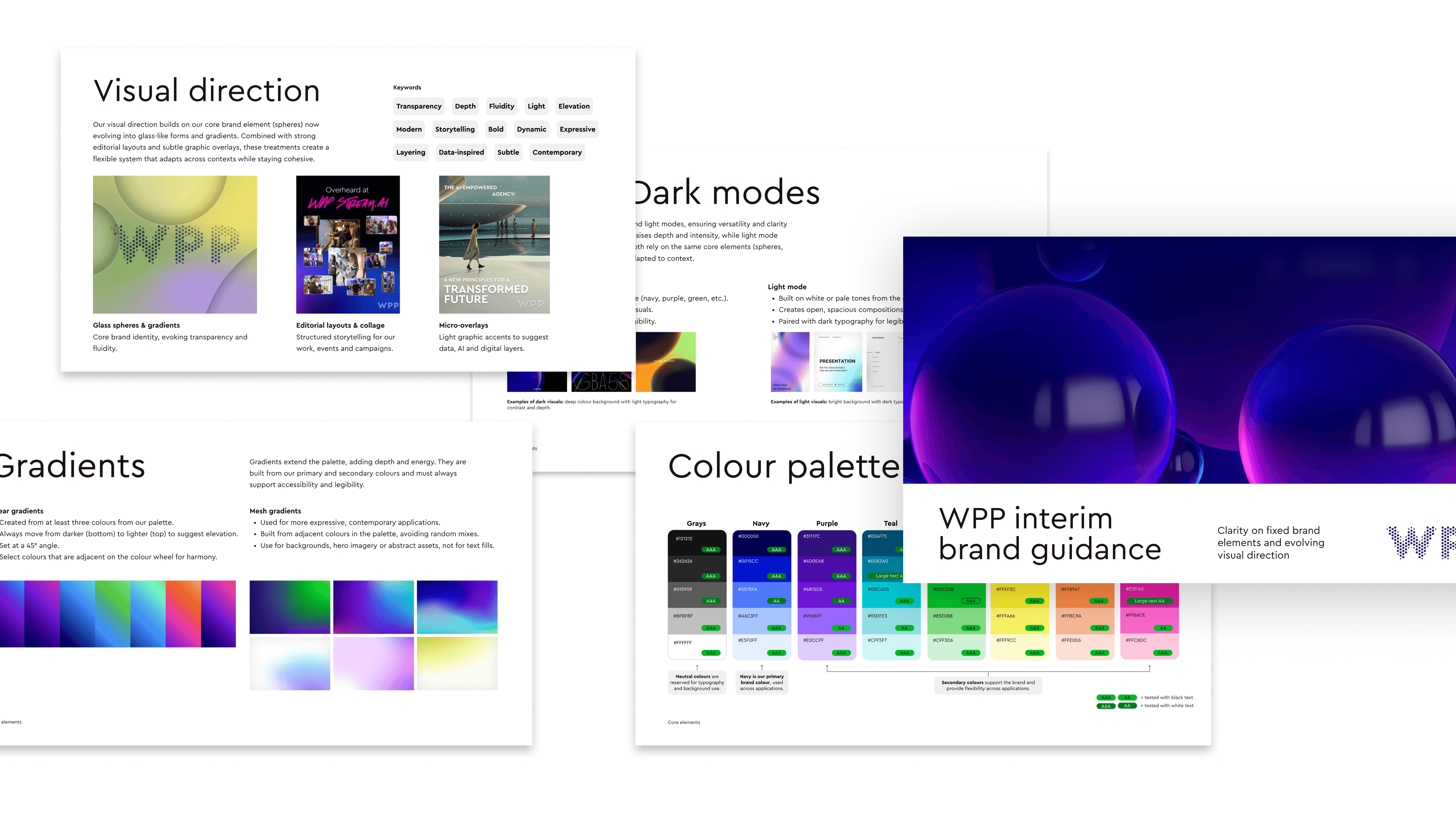
This interim framework translated the brand into a usable system, guiding teams and informing the direction of the subsequent brand evolution
Typography was rebalanced from heavy and decorative styles to a lighter system, improving clarity and consistency across applications
The palette was simplified by removing redundant colours and restructuring it into a smaller set of tonal families, improving consistency and scalability across applications
Making the brand operational
The work focused on evolving the visual language into a more flexible and contemporary system, creating a transition between the previous identity and the next phase of the brand.
Typography was rebalanced to create clearer hierarchy and reduce visual noise. The colour palette was simplified into tonal families, improving consistency and accessibility across applications. Layout structures became lighter, more editorial and easier to adapt across touchpoints.
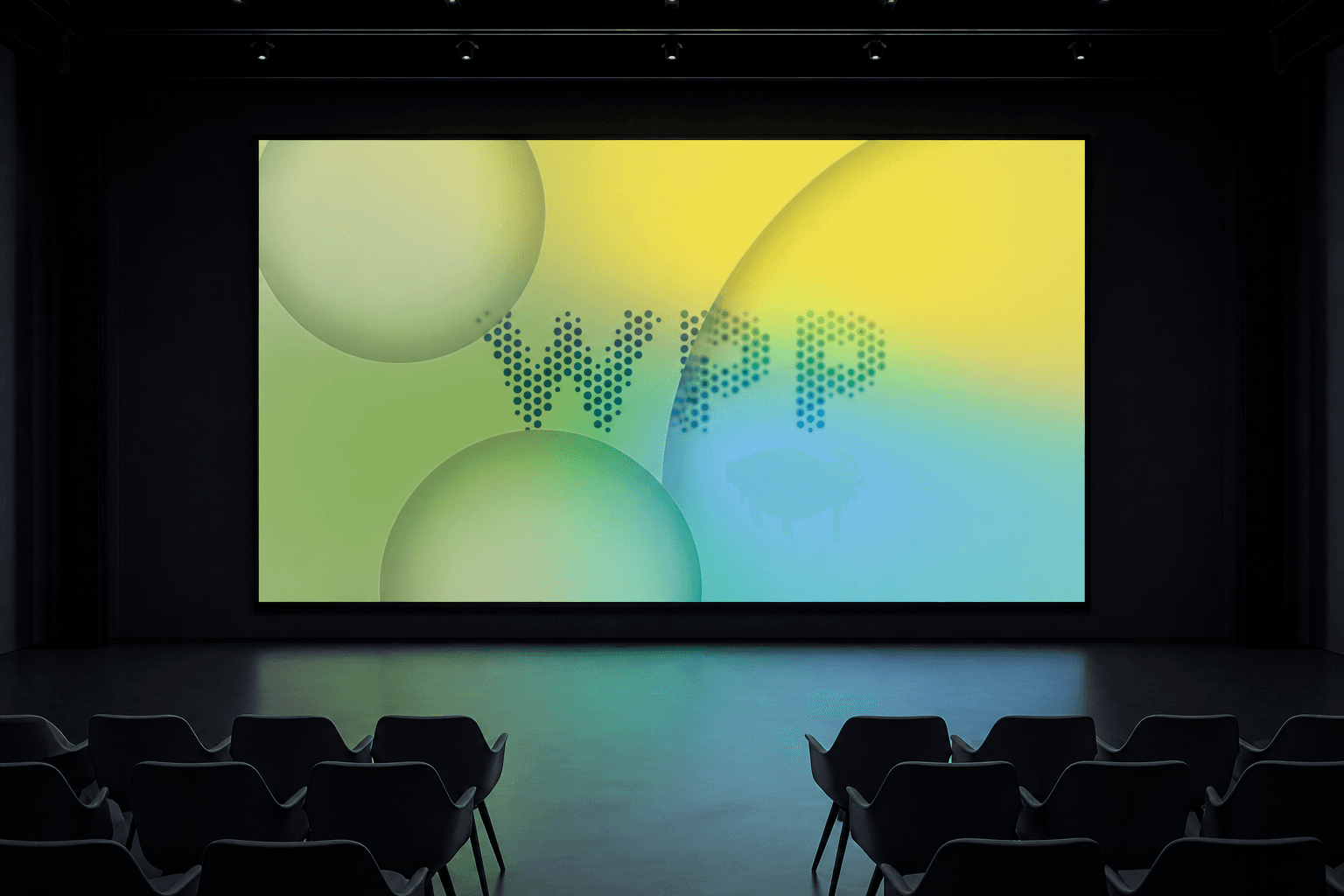
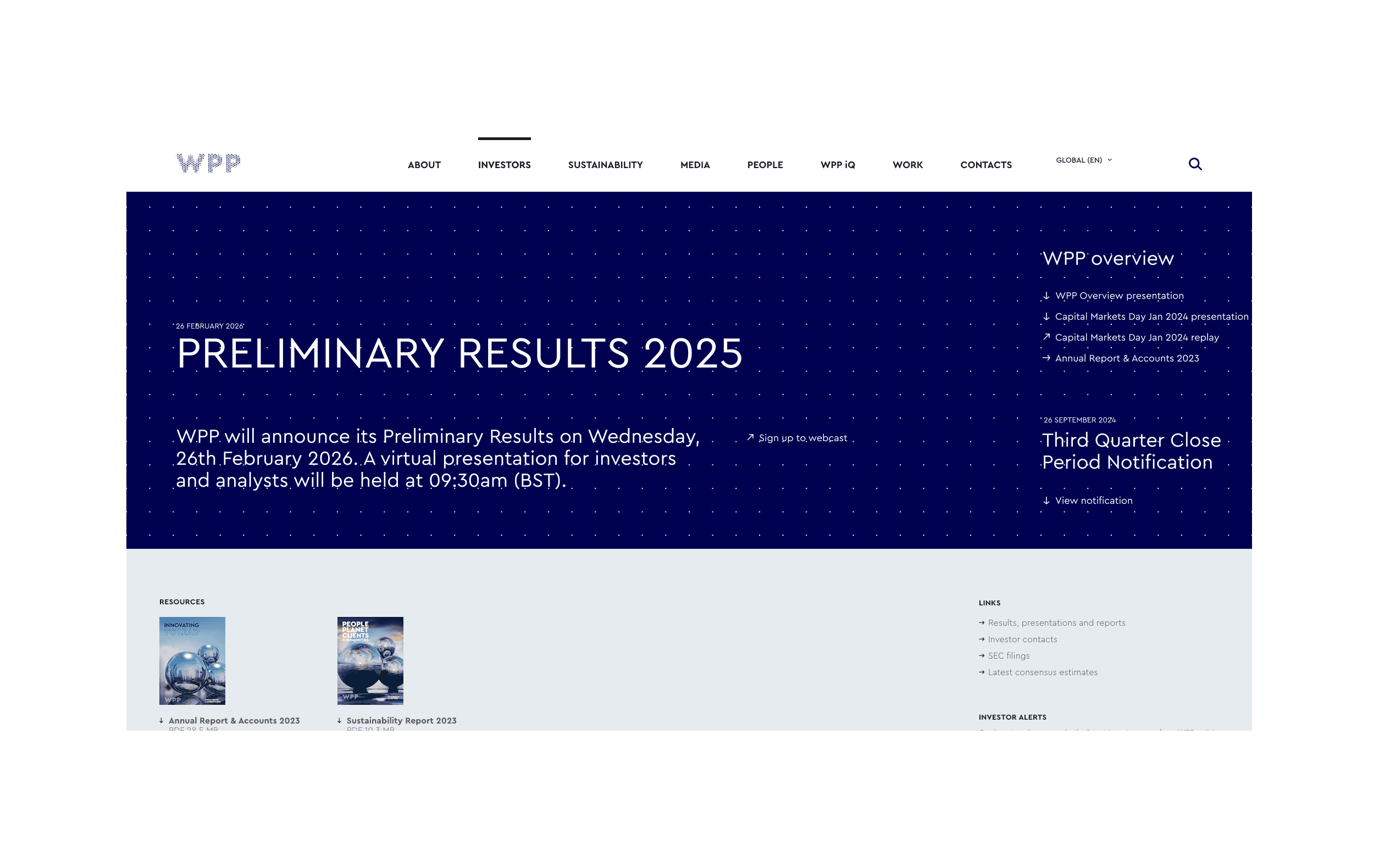
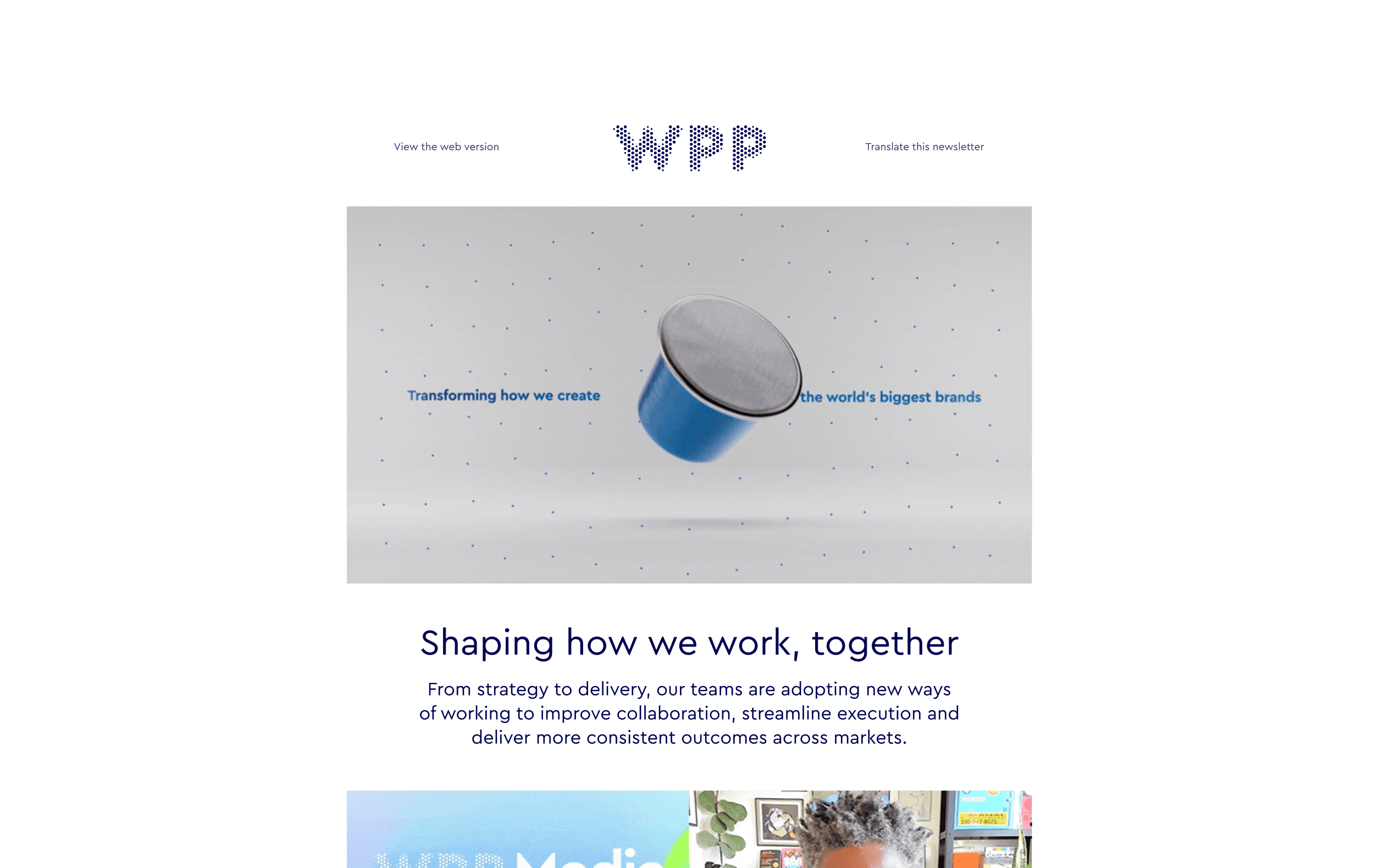
The system was applied across key touchpoints, ensuring consistency while adapting to different formats and user contexts.



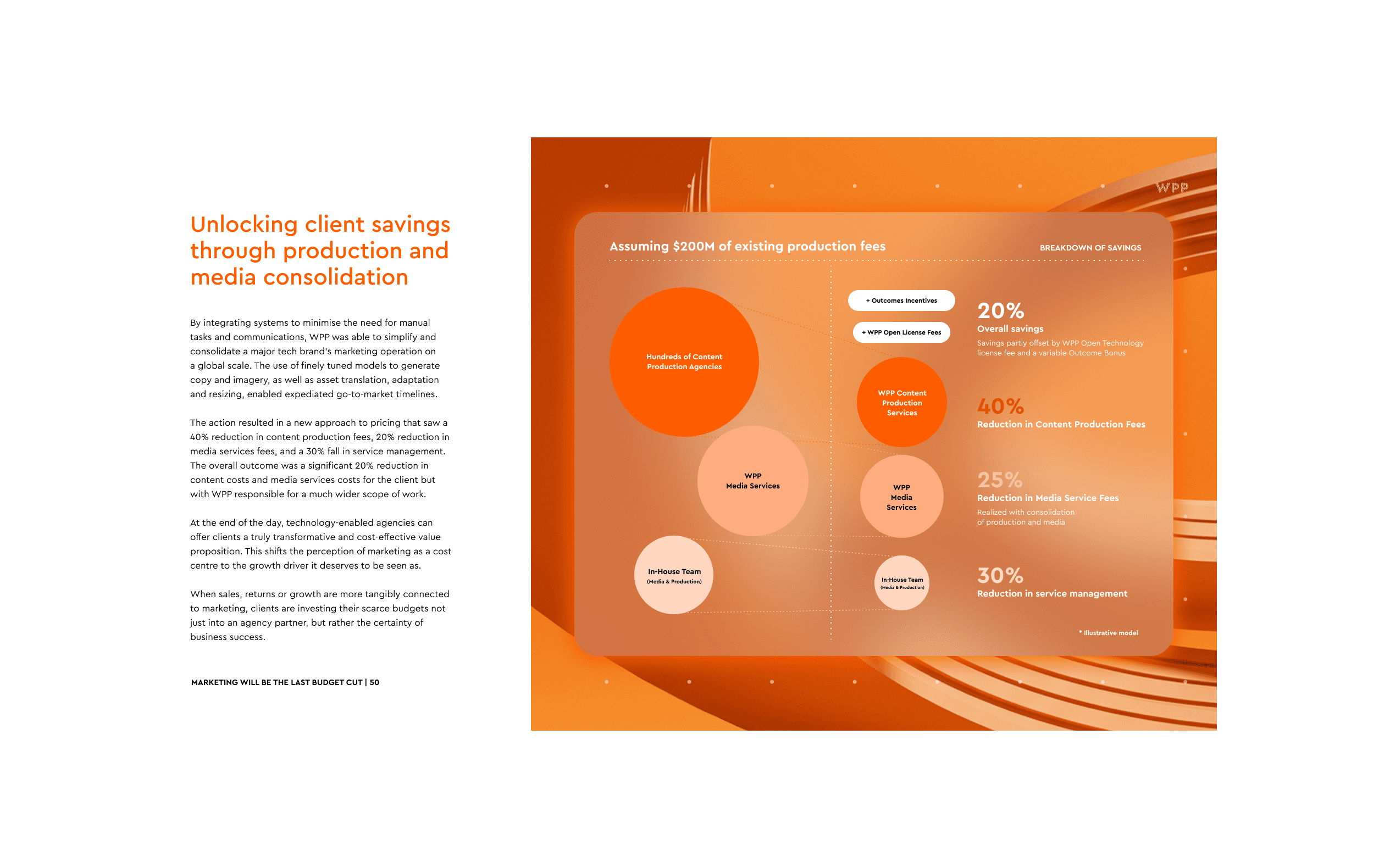
Scaling the system through AI
Alongside the visual system, I designed the behaviour and logic of an AI Brand Agent that helps teams apply the identity more consistently across outputs.
Rather than replacing creative direction, the tool supports brand application through structured guidance, validation and first-pass feedback across layouts, typography and visual components.
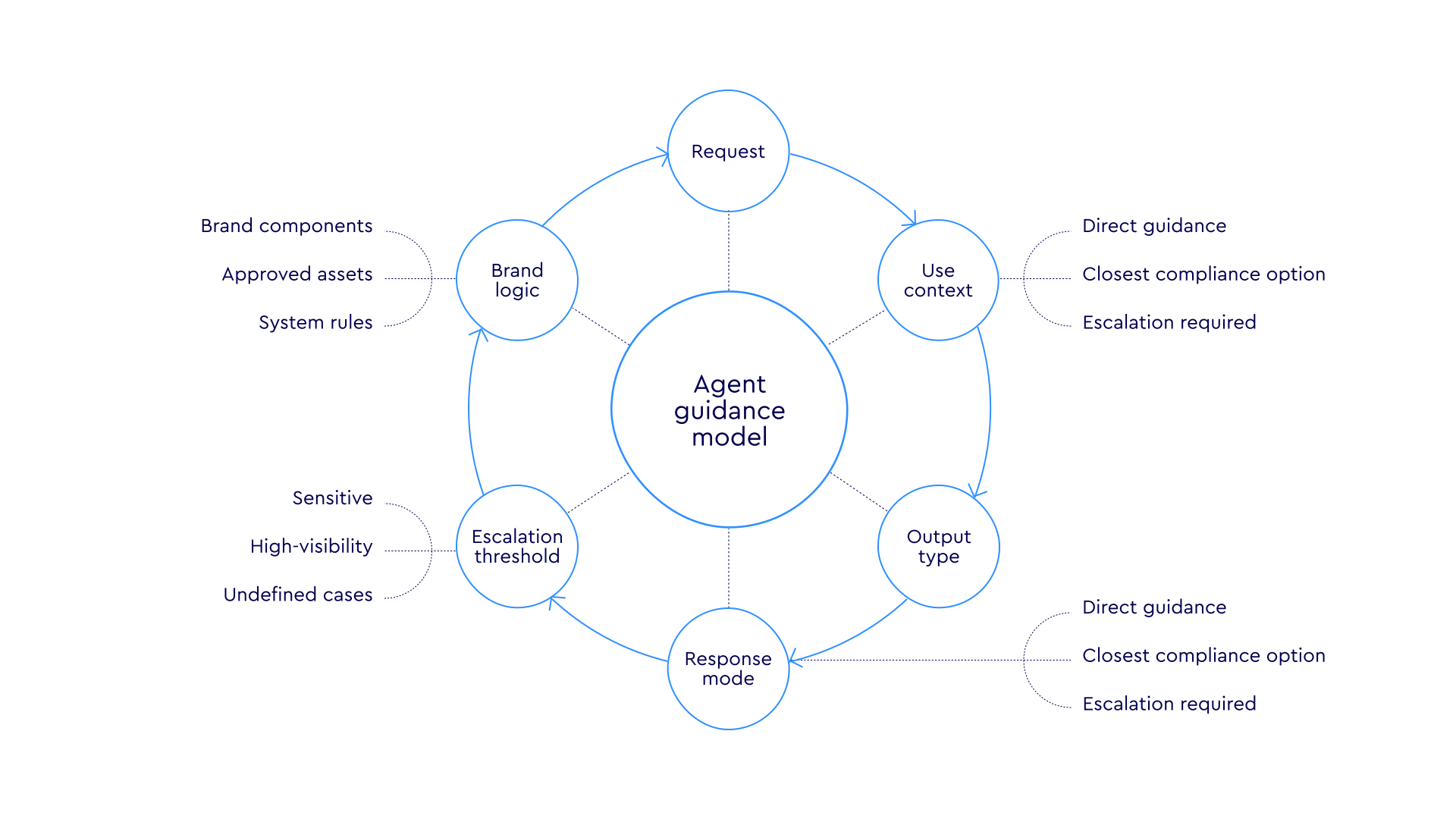
Each request is evaluated against context, output type, brand logic and escalation thresholds, enabling the system to provide direct guidance, suggest the closest compliant option, or route sensitive cases for review
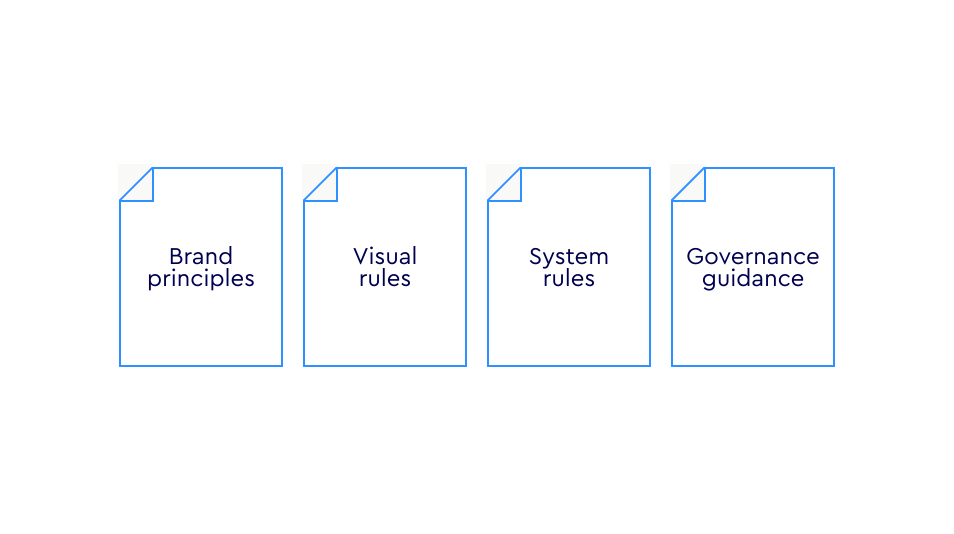
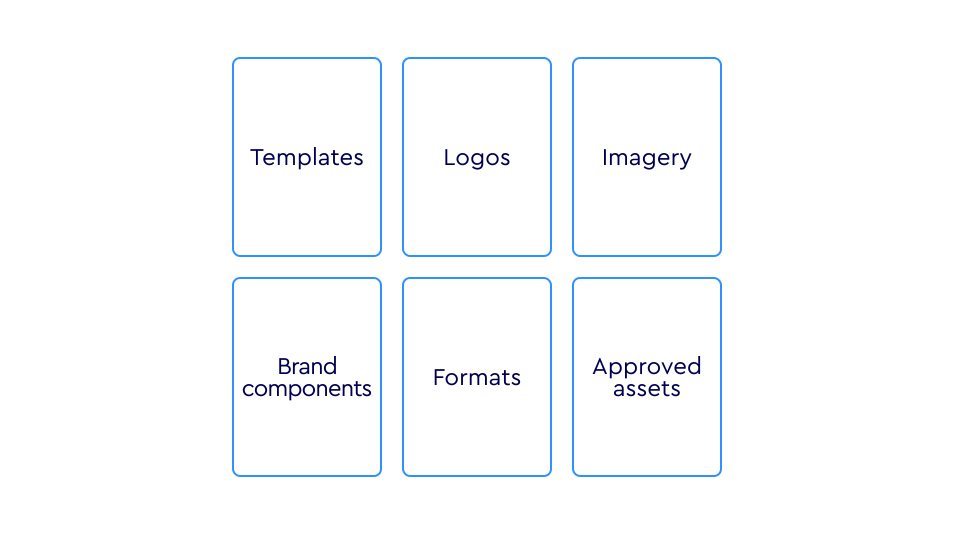
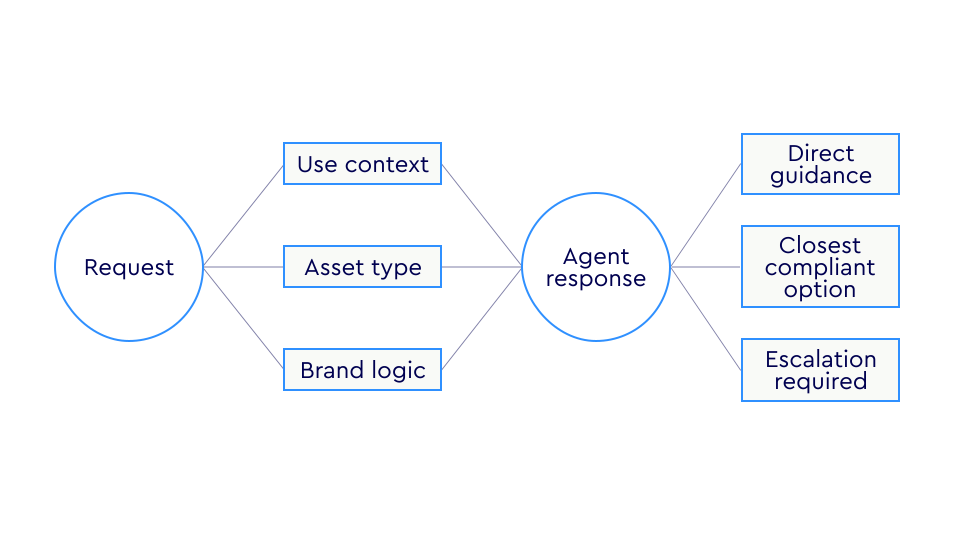
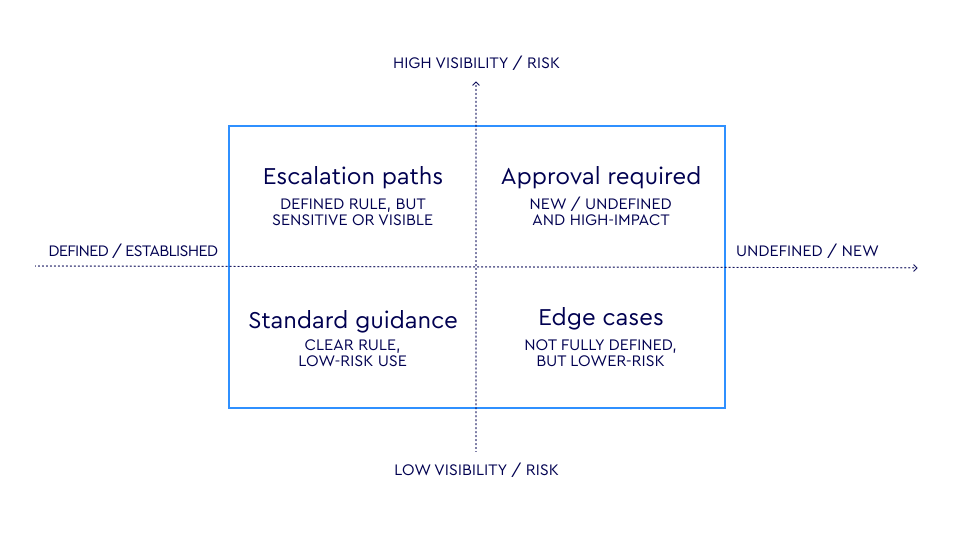
This decision model translates the four layers behind the agent into a usable response structure, showing how requests are interpreted, grounded and routed across real brand scenarios
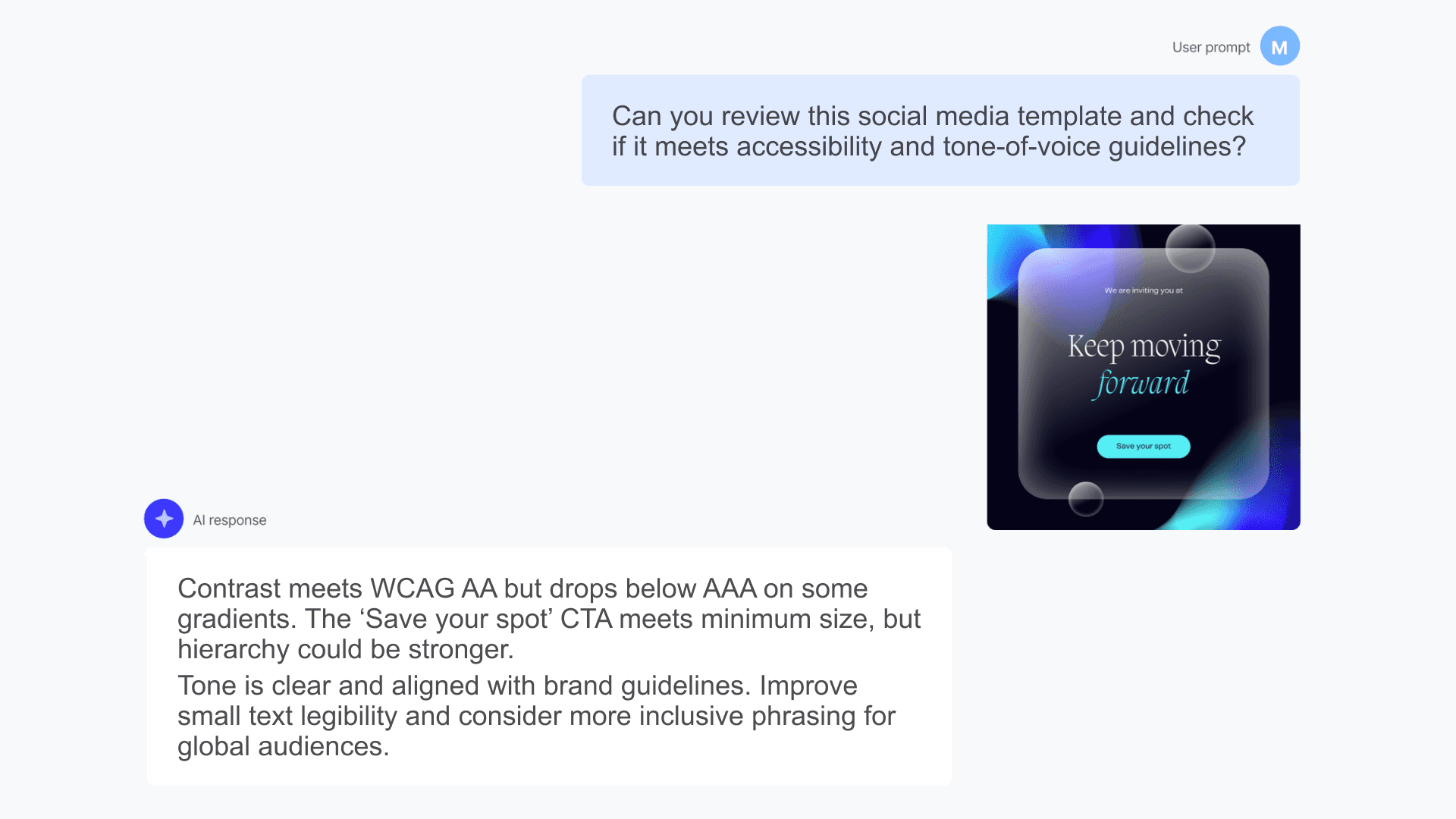
Reducing ambiguity and enabling more consistent brand decisions across real outputs